Scope
A free 15-minute call to set out the problem, the users, the deadline and the budget. Then the creation of artefacts: interactive models we iterate on before committing to the implementation.
Home Product and web applications Web application
Business tool, back office, dashboard, prototype to put in users' hands. The project starts with usable documents (specs, Figma mockup, Linear backlog) and ends in production, with one point of contact in between.
For an equivalent scope, here are the orders of magnitude on the French market and what you pay here.
Today's tools have merged the role of the person who scopes and the person who codes. An organisation without that chain bills for three people's coordination to produce one person's work. It isn't bad faith, it is its business model.
The first two columns are orders of magnitude on the French market, given as a benchmark: your situation may differ. The third is the rate applied here.
Most application projects go off track because development starts on a need that was never fully written down. Here, the first half of the work produces documents, not screens, and you can stop at the end of each phase.
A free 15-minute call to set out the problem, the users, the deadline and the budget. Then the creation of artefacts: interactive models we iterate on before committing to the implementation.
The screens are designed in Figma from the approved specification and artefacts, linked together, with every state planned: empty, loaded, error. Once the journey is approved, the scope is broken down into epics and tickets in Linear, each with its acceptance criteria.
Cycles of one to two weeks, with a version viewable online at the end of each one. Then the move to production on your infrastructure, the handover of access, written documentation and a recorded walkthrough. No mandatory maintenance contract.
Before the first line of code, the user journey is clear and precise. Risks are neutralised, because every important decision was made upstream, when a change still has no financial impact.
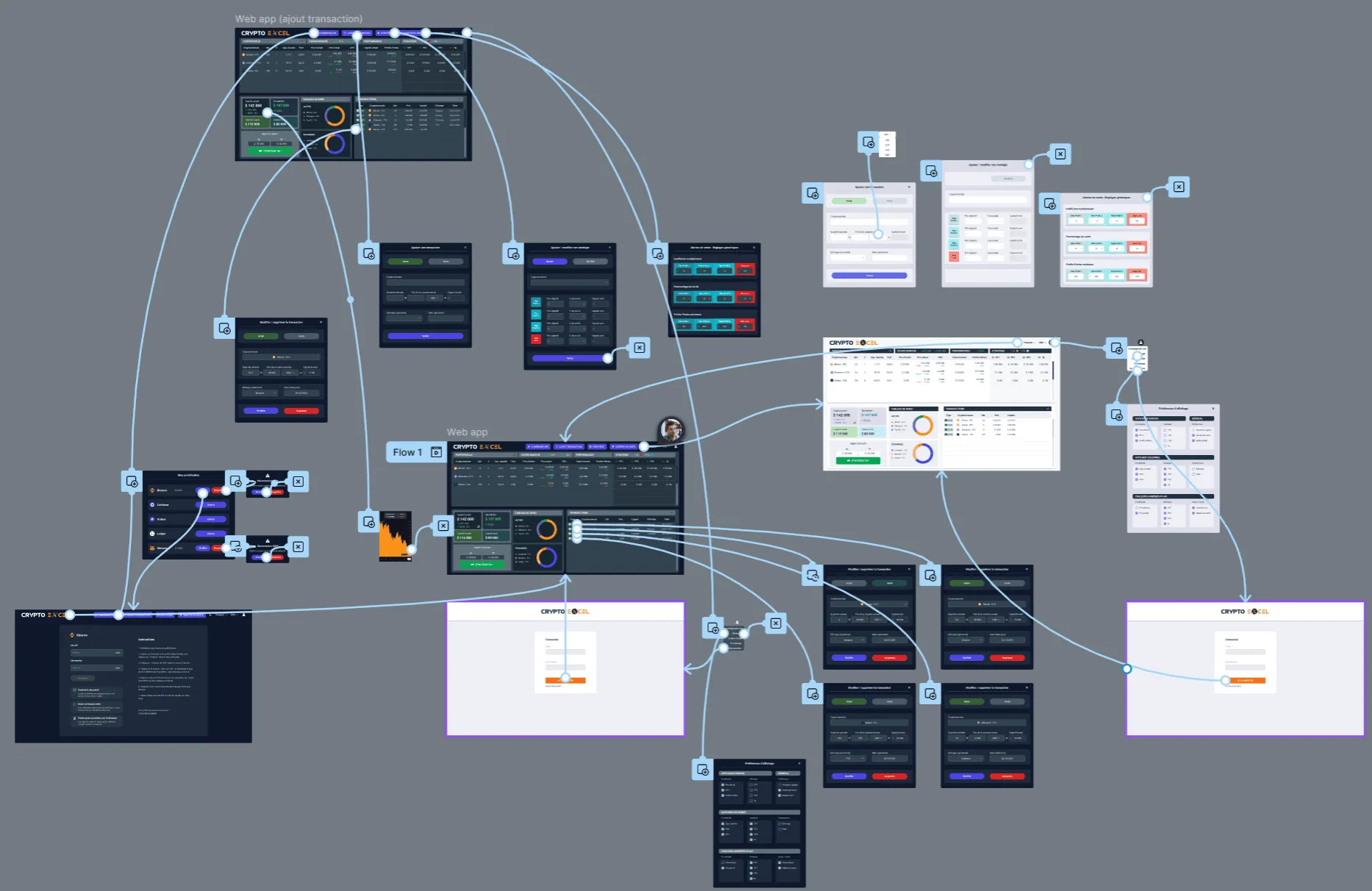
An interactive prototype to clarify the user journey, rather than pretty standalone pages.
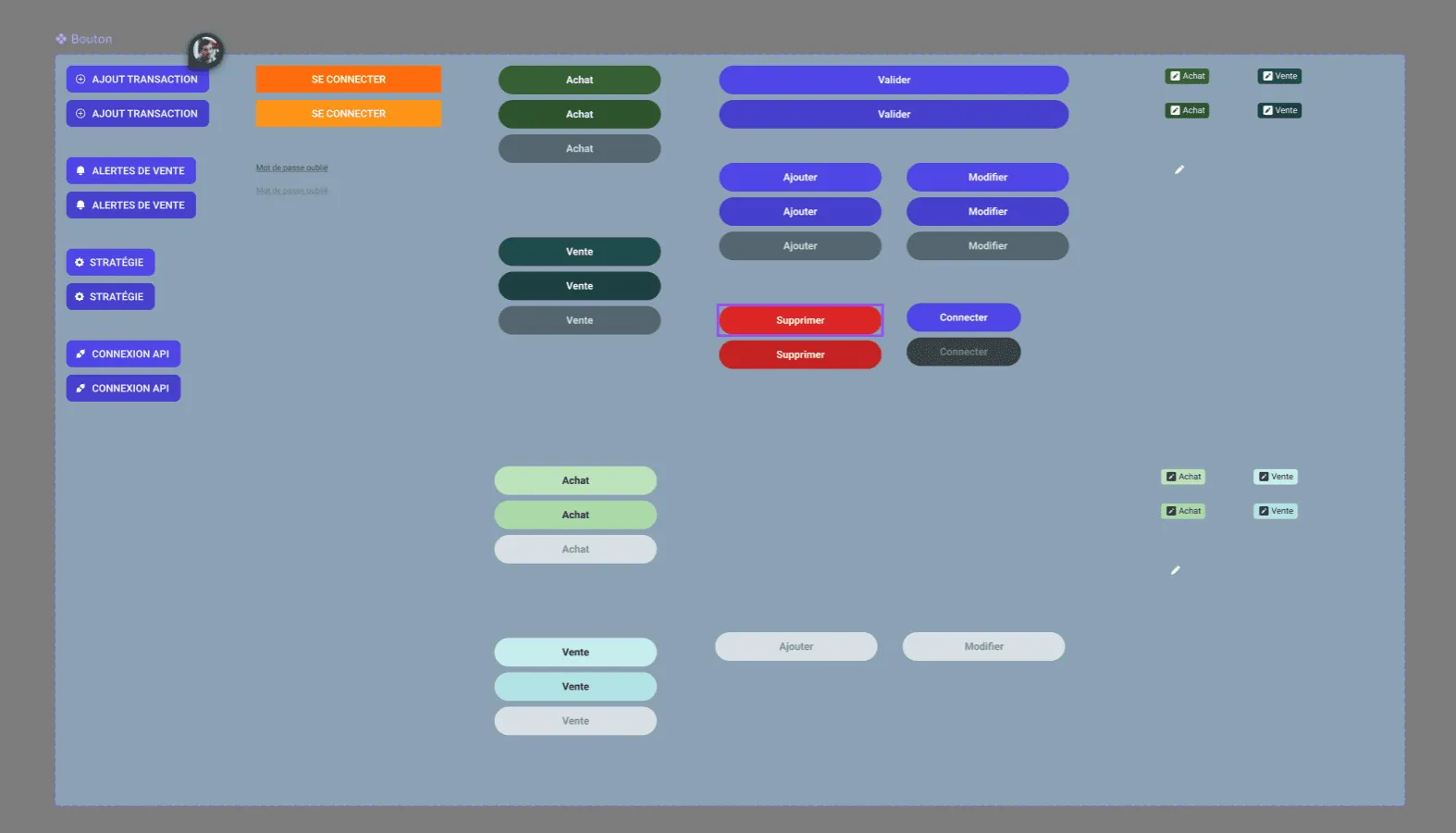
Buttons, fields, tables: reusable components with all their states, in auto layout. Every iteration builds on the work done upstream.
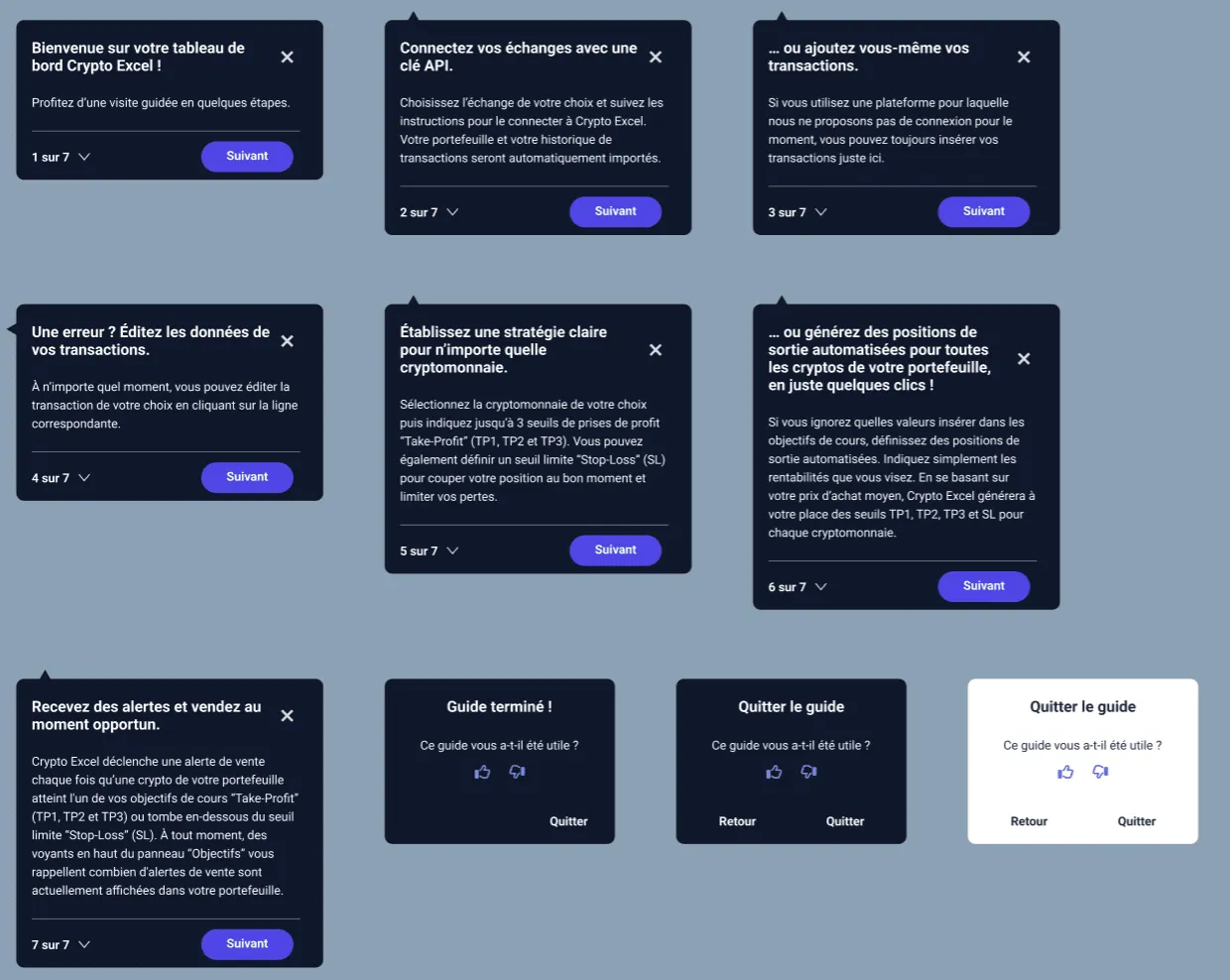
Every screen answers an identified problem, with several variants proposed at the approval stage.
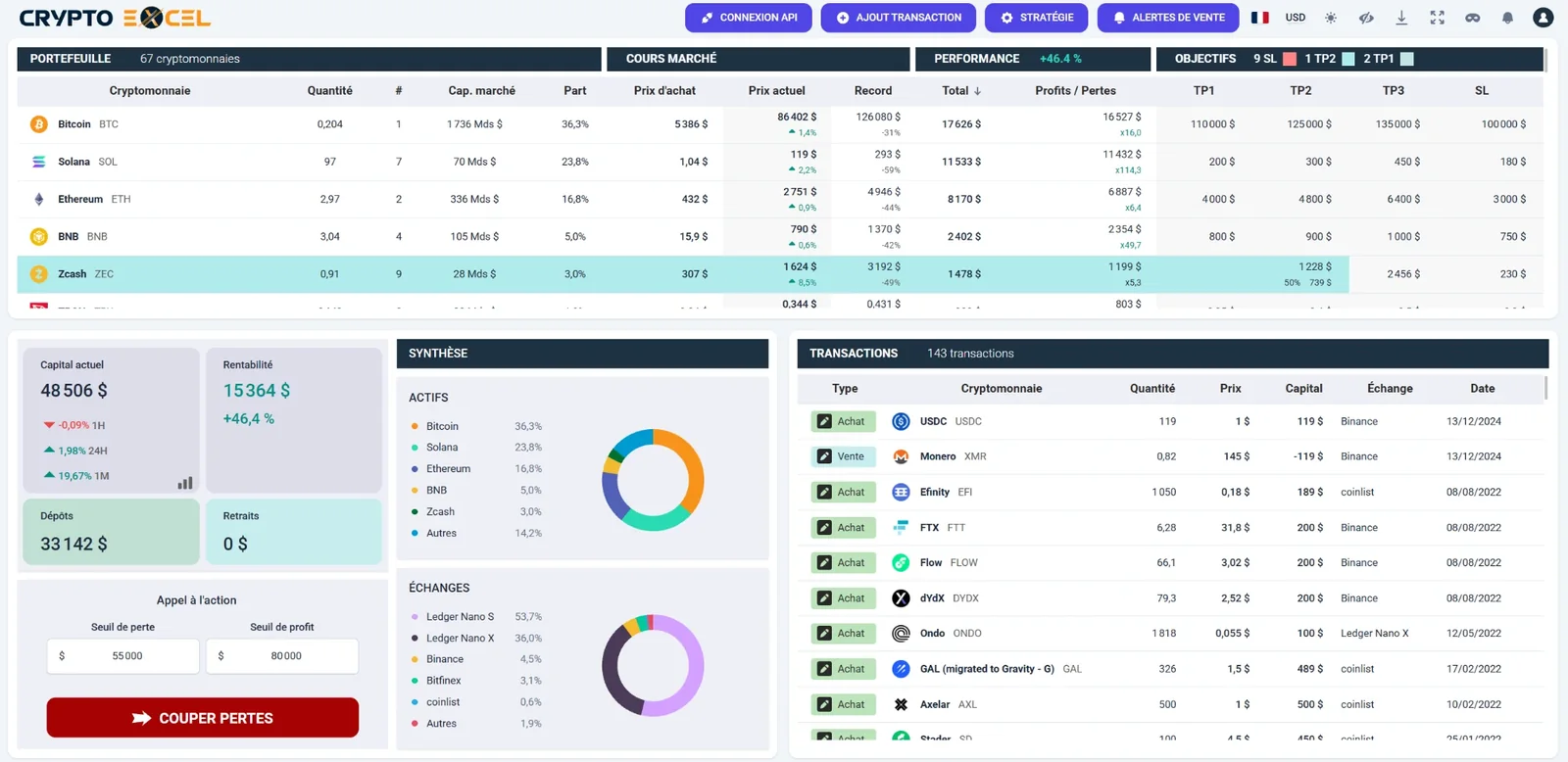
The components and states approved in Figma are reproduced identically, screen by screen.
A design system from the mockup stage. Colours, typography, spacing and components are defined once, with all their states, then reused on every screen and in the code. The first directions can be explored with Claude Design before being taken up and locked in Figma.
The split is deliberate: you decide to build once you know what to build, not before.
All the assets needed to start development.
Discuss itDevelopment through to production. A scope, a price and a date written down before we start, and one point of contact from the first call to delivery.
Book a 15-minute callNo VAT charged: VAT exemption scheme for small businesses, art. 293 B of the French General Tax Code.
Five questions, 20 seconds. You get the service that fits, a budget range and a timeline. No email address asked. The questionnaire is in French.
Take the questionnaireAn interactive prototype produced with Claude during the discovery phase: a first version of the application that you use, challenge and evolve over a few iterations before moving on to the technical implementation. We approve something that works, not a document.
The written functional specification, the screen map, the data model, the user journeys with their edge cases, the matching Figma mockup and the project spec written in Linear. It is what a development team needs to start in the best conditions.
Because the long part of scoping isn't the thinking, it is the write-up: rephrasing, breaking down, checking consistency between the screens and the data model, writing the edge cases one by one. An assistant does that in hours where it used to take days. The trade-offs remain mine, and I review every document before sending it to you.
Yes, that is even the point of the first offer. The Figma files, the specs and the Linear backlog belong to you. You can hand them to your in-house team, an IT services firm or another freelancer: they are written to be read by someone other than me.
The number of screens, the complexity of the data model, the integrations with your existing tools and the level of requirements on permissions and roles. The 15-minute call gives a first order of magnitude; the exact figure is set once the mockup and specs are approved, before the first line of code is written.
Then it stops. You have paid for a closed batch and you leave with usable deliverables. That is precisely the point of splitting it: you commit €8,000 to know what you are building, not €40,000 to find out along the way.
Standard, chosen so that any developer can take over: TypeScript, a mainstream front-end framework, a relational database, conventional hosting. The code lands in your GitHub repository from day one. No in-house framework, no dependency on a tool only I would know how to handle.
Fifteen minutes to set out the problem, the deadline and the budget. If the scope is clear enough to be priced, you receive a proposal within 48 hours.